Seeing the future in our one-year scorecard
Numbers from our Taree production hub prove what our model can do for plastic waste recycling at scale
NOV 2026
4 MIN READ
15 months after establishing our first production hub in Taree, Pelagic.Earth has shown how systems thinking supports speed, scale and positive impact from our solution to plastic waste.
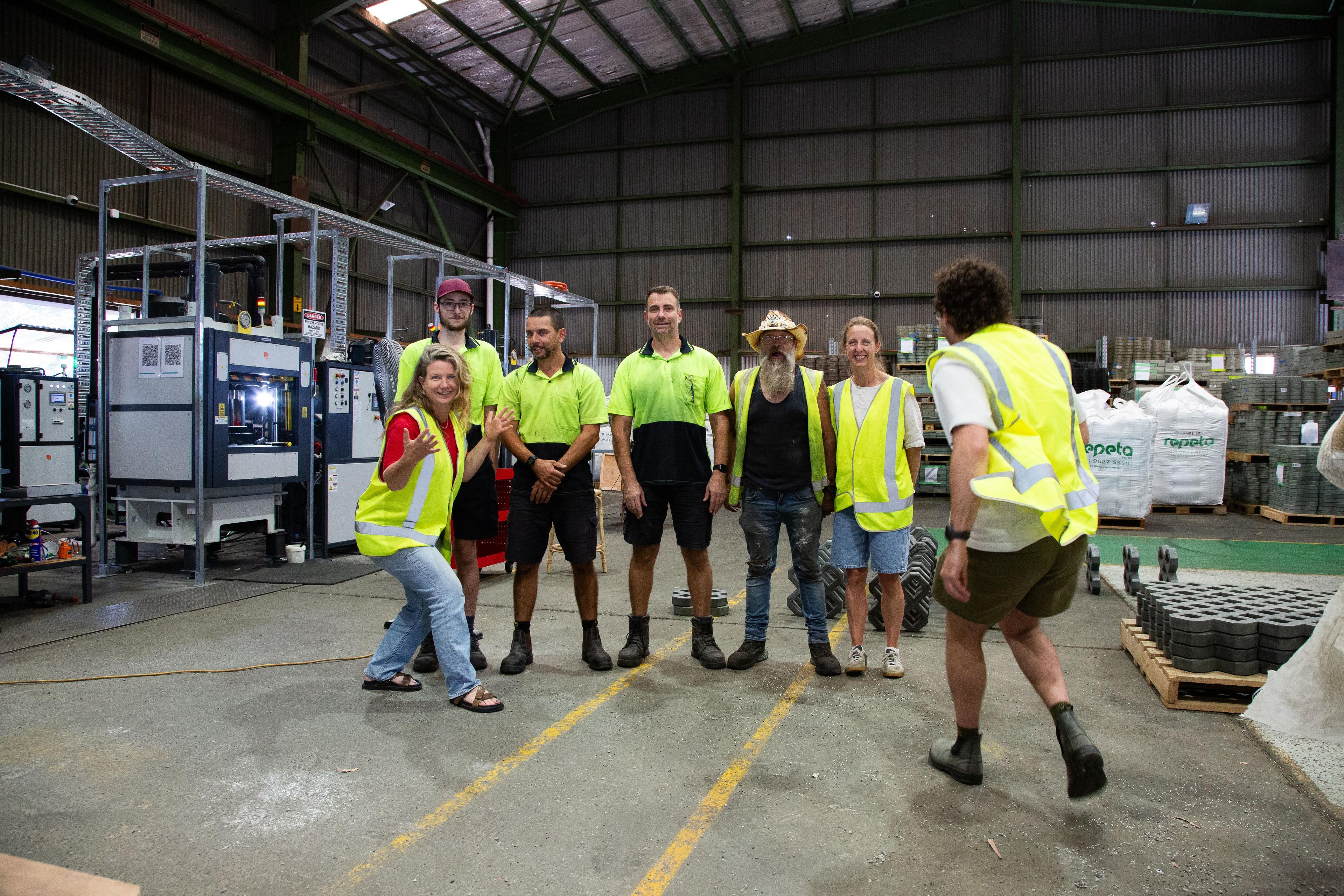
As a real-world test of our systems-led approach to circularity and rapid manufacturing deployment, our Taree production hub has delivered across every metric. Operational within 30 days of site mobilisation and reaching full productivity within three months, it shows how fast our model can remove plastic waste from landfill and produce high-quality, low carbon pavers, revenue and jobs.
Every system considered
To prepare our pathway to these outcomes, we’ve given deep consideration to the many systems we’re working across. Product design, operating technology, business partnerships and education and training are the connected components of our model. Optimising design for all these elements to work together seamlessly is the foundation for our initial success and positive impact for productivity, performance, community and environment.
Designed for continuous improvement
Starting from our detailed production design blueprint, integrating data monitoring was critical for testing, learning and improving as production ramped up. Following our 30-day pilot, we achieved optimised, consistent output in the next quarter. By the nine month mark production increased by 31% overall, with a drop in defect rate from <5% in the pilot phase to 0.41% by Q4.
These numbers are based on single-shift operation. Moving to multi-shift operation in the next phase will demonstrate how we can quickly unlock more capacity from a single hub. This will see us increase output even further without growing our infrastructure footprint, proving the case for return on investment and a low impact solution for scaling production.
“What we've proven in twelve months is not just that Pelagic.Earth's technology works, the pilot data in this report speaks to that, but that our model of decentralised, community-anchored manufacturing is genuinely repeatable. Taree was the first hub. It will not be the last.” Philippa Abbott, Founder, Pelagic.Earth
Going to the source of waste
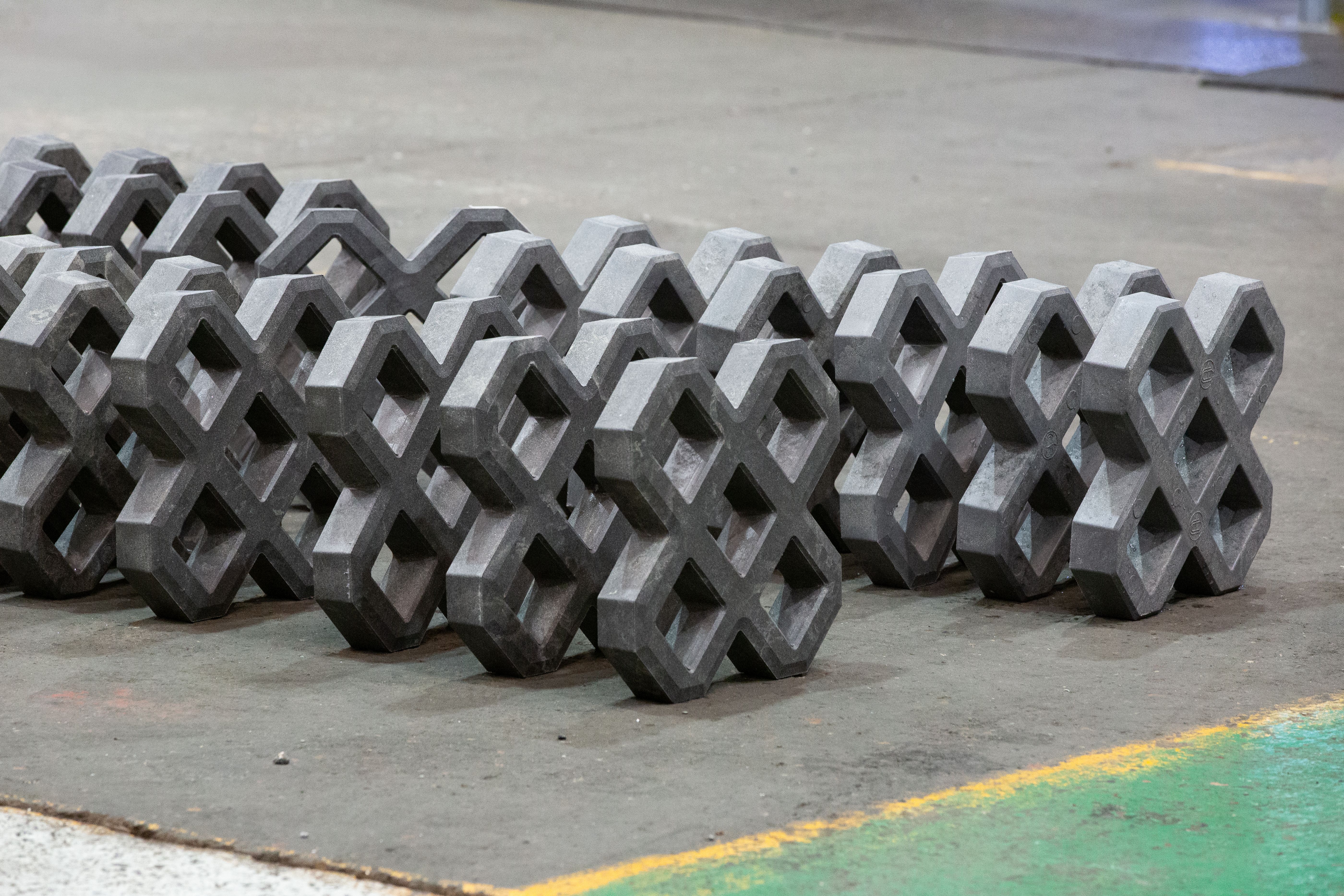
Pelagic.Earth pavers are designed as a beautiful, durable solution to a waste problem that’s growing by the second. Until now, soft plastics recovered in Australia had nowhere to go, with recovery programs struggling to find ways to process what they collect.
Colocating our production hub with a regional collection point means we’re changing the pathway for plastic waste and turning hundreds of tonnes of waste into premium building materials for property developers, councils and contractors. In the first 12 months, we’ve diverted 70+ tonnes of plastic from oceans and landfill, along with 90+ tonnes of recycled glass.
A carbon champion across the lifecycle
When a waste stream doesn't have to travel to be processed, this avoids thousands of kilometres of freight emissions and cost. Locating production in the iQRenew neighbourhood is a deliberate choice to reduce the total carbon footprint of our pavers. It’s an integral part of a design-for-decarbonisation approach that considers the whole-of-life carbon footprint of our products and operations.
Thanks to the Australian Research Council (ARC)/Industrial Transformation Research Hub for the Transformation of Reclaimed Waste Resources to Engineered Materials and Solutions for a Circular Economy (TREMS) partnership, Pelagic.Earth commissioned a Life Cycle Assessment (LCA) from University of Melbourne, breaking down the total carbon performance of our pavers. On this basis alone they make a compelling case for construction projects where reducing embodied carbon is a challenge. As a lightweight product meeting and exceeding AS/NZS 4456 and AS 4586 standards for tensile and compressive strength, abrasion, UV weathering and more, they combine ease of handling with durability, making them a strong contender for any project where concrete pavers are the norm.
Evidence to back our mission and growth
From 1 July 2025 to August 2026, our Taree hub produced 60,000 units of our low carbon, high performance pavers. With our system design and refinements documented, along with our operational playbook, we’re ready to repeat the model, and keep improving it, across a national network of production hubs. We’ll also be applying the framework to our mod factories, and bring Manufacturing as a Service (MaaS) to virtually any location where plastic waste exists.
Socio-economic measures for the project - including four full-time jobs for locals and more than half a million dollars spent with local trades and small businesses - offer another glimpse of positive impact from the Pelagic.Earth model. It’s all part of our mission to keep transforming plastic waste into something valuable, and bring jobs and environmental relief to even more communities.